
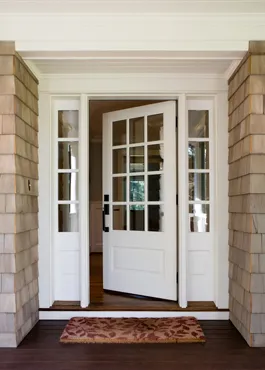
What this climate does to an opening
Summers are hot and humid, monsoons are relentless, and even the cool season is warm by most standards. On top of that, city dust and noise are constant. Older windows and doors tend to fail in the same predictable ways: seals that have hardened, frames that have moved, hardware that has seized, and drainage that has silted up.
Replacing them changes more than the look. It changes how the rooms behave during the six weeks of the year when the weather is at its worst.
What a good window does here
Manages sun and heat
Strong western sun can turn a room into an oven by four in the afternoon. The right glazing and frame reduce heat gain so the room stays usable and the air conditioning works less. This is where double glazing and solar-control glass earn their cost.
Ventilates properly
Humidity makes interiors feel sticky, and the fix is air movement rather than cooling alone. Windows that open wide, on the right side of the room, do more for comfort than another degree on the thermostat.
Cuts noise
Traffic, trains and construction are relentless. Well-sealed windows with the right glass turn that into background sound. If noise is the main complaint, soundproof windows or acoustic inserts are the specific answer.
Keeps water and dust out
Monsoon rain arrives horizontally. Tight seals, correct drainage and quality hardware are what stop it getting past the frame and into the plaster.
Brings in daylight
Larger panes and slimmer sightlines make a flat feel bigger. The trade-off is heat gain, which is why glass specification and glass area are one decision rather than two.
What a good door does here
Security. Strong frames, multi-point locking and sensible hardware. The front door is the one opening where this is not optional.
Weather sealing. A balcony or terrace door takes the same beating as a window and has a threshold to drain as well. Lift-and-slide systems seal considerably better than standard sliders for exactly this reason.
Connection to outside. Balcony and terrace doors should invite the view in without losing insulation or security. Sliding, French, slide-and-fold and pivot each suit a different opening — see door types for the range.
Materials worth considering
uPVC resists warping, corrosion and discolouration, insulates well, and needs almost no maintenance. It is the default for most Mumbai homes for good reason.
Aluminium gives slimmer sightlines and spans wider openings, at the cost of conducting more heat unless it is thermally broken.
Tempered and laminated glass are stronger and fail safely. Laminated also helps with noise and blocks most UV, which matters for furniture and flooring.
Doing it as one project
Replacing windows and doors together means one survey, one set of society permissions, one installation, and matching profiles across the flat. Where that is not possible, stage it by elevation: the noisiest and most weather-exposed side first.
We manufacture in Bhandup West and fit right across the city, including Navi Mumbai and Thane — see how we manufacture, browse window types and door types, or tell us the flat’s layout and which way it faces and we will suggest a specification.