
Skip to content
Khidkiji Slides India

Range of Insect Screen

An insect screen is what lets you keep a window open in the evening. In a city where the alternative is choosing between mosquitoes and air conditioning every night, it is one of the cheapest genuinely useful things you can add to a window.

  • Manufacturing since 2007
  • 5,000+ windows installed
  • 219 corporate partners
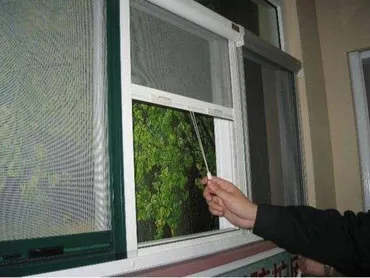
Hand drawing a fine mesh screen down across the inside of a window frame

Get a quote in one working day

Three fields. No obligation.

Or call +91 80979 88888

Why range of insect screen

Ventilate after dark

The window stays open through the evening without the room filling with mosquitoes.

Matched to how the window opens

Sliding, pleated, pull-down and zig-zag systems, chosen for the opening rather than sold as one answer.

Retractable systems available

Screens that roll or fold away completely, so the view is uninterrupted when you are not using them.

Fine mesh options

Standard mesh for mosquitoes, finer grades where smaller insects are the problem.

Choosing by how the window opens

This is the whole decision. The screen has to work with the sash rather than against it.

Sliding mesh. A framed mesh panel running in its own track alongside the window sashes. The neatest option on a sliding window, and best designed in at the start on a three or four-track system.

Pleated mesh. The mesh folds concertina-style and stacks into a slim side channel. Suits wide openings and doors, and it retracts almost completely out of sight.

Pull-down mesh. A roller system pulled down from a cassette at the head. Good on casement and top-hung windows where there is no track to work with, and it rolls fully away when not needed.

Zig-zag mesh. A pleated system engineered for very wide spans, where a single pleated screen would be unwieldy.

Outward-opening sashes

A common practical problem. If the window swings outward — a casement or top-hung unit — an external screen would block the sash.

So the screen goes inside. Pleated and pull-down systems suit this best, because they fold or roll clear rather than occupying the plane the handle needs.

It is far easier to plan this at the point of ordering the window than to retrofit afterwards, which is why we raise it at survey.

Mesh grades

Standard. Stops mosquitoes and the usual flying insects. Minimal effect on airflow and visibility.

Fine. For smaller insects. Noticeably more restrictive of airflow, which on a window you rely on for ventilation is a real trade-off.

Pet-resistant. A heavier grade that tolerates a cat or dog pushing against it. Worth it on a door a pet uses.

We will steer you away from the finest mesh unless you have a specific reason — the airflow difference is more significant than people expect.

Dust, which matters here

Mumbai road dust clogs mesh faster than anything else, and a clogged screen is a screen that no longer ventilates. Brushing or vacuuming it a few times a year — more on a road-facing elevation — keeps the airflow you paid for.

Retractable systems have an advantage here: rolled or folded away, the mesh is not collecting dust when you are not using it.

Fitting to new or existing windows

On a new window, a screen track can be built into the frame from the start, which is always neater. On an existing window, the screen is mounted in or over the reveal, and the reveal depth decides which systems are possible.

Send a photo of the window with the sash open and we will tell you which of the four suits it. See window types if you are specifying new windows and want the screen designed in.

Common questions

Which insect screen is best for a sliding window?

A [sliding mesh](/products/insect-screens/sliding-mesh/) running in its own track is the neatest solution, and on a three or four-track window it can be designed in from the start. Retrofitting to a two-track window usually means an externally mounted frame instead.

Do insect screens reduce airflow?

Somewhat — a mesh necessarily obstructs some air. Standard mosquito mesh has a modest effect; very fine mesh for smaller insects reduces airflow more noticeably. On a window you rely on for ventilation, that trade-off is worth thinking about before choosing the finest grade available.

Can screens be fitted to windows that open outwards?

Yes, but the screen goes on the inside, since the sash needs clear space outside. [Pleated](/products/insect-screens/pleated-mesh/) and pull-down systems work well here because they fold or roll clear of the sash operation.

Are insect screens worth it if we use air conditioning?

Most households use both — air conditioning in the heat, open windows in the cooler months and in the evenings. A screen is what makes the second option available rather than theoretical, and it cuts the cooling load on the days you can use it.

How do you clean an insect screen?

Vacuum or brush the mesh and wipe the frame. In Mumbai, road dust clogs the mesh faster than anything else and is what reduces airflow over time, so cleaning it a few times a year makes a noticeable difference.

Related

Get a quote for range of insect screen

  • Manufacturing since 2007
  • 5,000+ windows installed
  • 219 corporate partners
Call nowWhatsApp