
Hinged types
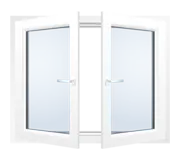
Casement
Side-hinged, swinging open. Seals better than anything else because the lock draws the sash onto a continuous gasket, and the whole opening clears for ventilation. The default choice wherever there is room to swing. See casement windows.
Top hung (awning)
Hinged at the head, opening outward from the bottom, so the sash shelters its own opening. The one type you can leave open during a monsoon shower — which is why it belongs in bathrooms, kitchens and stairwells. See top hung windows.
Bottom hung (tilt)
Hinged at the base, opening inward from the top. Gives controlled ventilation through a narrow gap that is hard to reach through, which makes it a sensible choice at height or where security matters.
Tilt and turn
One sash, two operations: tilt inward from the top for secure background ventilation, or swing fully open like a casement. Popular in European systems and genuinely useful — the tilt position can be left unattended, and the turn position makes cleaning the outside easy from inside.
Centre hinged (pivot)
Rotates about a central horizontal or vertical axis. Space-saving, easy to clean from inside, and visually distinctive. Less common because the seal and the hardware are more complex.
Casement French
A full-height pair meeting with no centre mullion, so the entire opening clears. See casement French windows.
Sliding types
Sliding (slider)
Sashes run horizontally on rollers in a track. No swing space needed, large glass areas, and the standard choice on Mumbai balconies. The trade-off is sealing — proximity and brush strips rather than compression. See sliding windows and uPVC sliding windows.
Fixed and special shapes
Fixed (picture) windows
No opening at all. Best possible seal and thermal performance, lowest cost per square metre of glass, and the widest uninterrupted view. Pair one with a small opener rather than making the whole opening operable.
Arched windows
Full arch, segmental or eyebrow heads, made to the radius of your opening. See arch windows.
Garden windows
A three-dimensional box projecting out from the wall, glazed on the sides and top. A greenhouse shelf for a kitchen — charming, and genuinely useful for herbs.
Skylights and rooflights
Glazing in the roof plane rather than the wall. See skylight windows.
Choosing
Answer three questions and the type usually chooses itself: is there room for a sash to swing; does the room need to be quiet or dust-free when shut; and does it need to ventilate during rain?
Still deciding between frame materials? uPVC vs aluminium windows covers that comparison properly. For glass rather than operation, see windows with glass. For how any of these get fitted, see window installation, and for the full range in print, see our brochure.