
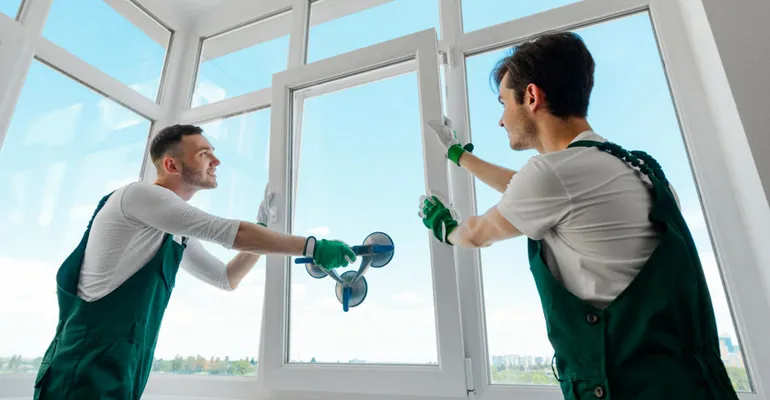
Why installation is where windows succeed or fail
A high-specification window fitted into an unsealed, out-of-square opening performs like a cheap one. The insulation depends on a continuous seal, the acoustic performance depends on the sash pulling tight onto its gasket, and both depend on the frame being true.
That is why we treat installation as part of the product rather than as delivery.
How the job runs
1. Site survey
We measure the opening at three widths and three heights, check it for square and plumb, and look at what the frame will actually be fixed into. Openings in older Mumbai buildings have usually been re-plastered at least once and are rarely the size the drawing says.
We also look at access: which lift, which staircase, and whether a large unit can physically be turned into the room.
2. Manufacture to the measured size
Units are made in our Bhandup West factory to the surveyed dimensions, with the tolerance allowance built in. Nothing is trimmed on site to fit.
3. Removal and preparation
The old frame comes out, the opening is cleaned back to sound material, and anything that has degraded — soft plaster, loose render, corroded fixings — is made good before the new frame goes anywhere near it.
4. Setting and fixing
The frame is set on packers at the load points, shimmed level and plumb, and mechanically fixed into structure at the correct centres. This is the step that decides whether the sash still closes easily in five years.
5. Sealing and drainage
A continuous seal around the perimeter, and drainage slots left clear so that water reaching the frame runs back out. Blocked drainage is one of the most common causes of monsoon leaks — and it is usually caused by sealant applied over the slots by someone being thorough.
6. Handover check
Every sash opened, closed and locked. Every lock checked for full engagement. Hardware adjusted. Protective film removed, drainage confirmed clear, and the operation of restrictors and child locks explained.
What we install
The full range of window types — casement, sliding, top-hung, arched, French and double-glazed units — in uPVC and aluminium, plus custom designs where the opening is an unusual shape.
Because we manufacture our own systems, a non-standard opening is a size to make rather than a problem to work around.
New build, replacement and refurbishment
New build and fit-out — we work to the architect’s schedule and coordinate with the sequence around us.
Replacement — the common case, and the one where survey matters most, because the existing opening is the constraint.
Refurbishment — where the frame is sound and only the glazing or hardware is failing, replacement glazing or a service visit is often the better-value answer. We will say so rather than quote for a full replacement.
Tell us the number of openings, the floor, and which way they face. That is enough for us to arrange a survey and give you a real figure.