
What security glass is
Security glass refers to glazing engineered to withstand impact, resist forced entry, and protect occupants from injury. Ordinary annealed glass shatters into sharp pieces under moderate force. Security glazing does not.
Laminated glass bonds one or more plastic interlayers between panes. Struck hard enough to crack, the fragments cling to the interlayer rather than falling out. The window holds its shape, which slows or defeats forced entry and keeps people inside safe from flying glass.
Toughened (tempered) glass is heat-treated to several times the strength of annealed glass, and breaks into blunt granules rather than shards. Very strong, but once broken the pane clears the opening — which is why laminated is the better security choice and toughened the better safety one.
Laminated-toughened combines both, and is what most serious security specifications use.
Why it matters in Mumbai specifically
Better protection against break-ins
Windows are the weak spot in most security plans. A determined intruder gets through ordinary glass quickly and quietly. Security glass increases the effort and the noise substantially, which deters most attempts outright. That matters on a busy street, in a ground-floor flat, and in a commercial storefront.
Safety during storms
Monsoon brings wind-borne debris. Security glass is designed to stay intact longer and hold fragments together, which reduces the danger from flying glass — a real consideration in households with children or pets.
Quieter interiors
Urban sound is constant: traffic, horns, construction, neighbours. The multiple layers and interlayers that absorb impact also damp sound. You do not get silence, but you get a noticeably calmer room. If that is the main goal, acoustic glazing is specified differently and does it better.
Better thermal comfort
Depending on the build, security glazing can be combined with low-E coatings and sealed units that reduce heat gain, so the air conditioning works less.
Light and views stay intact
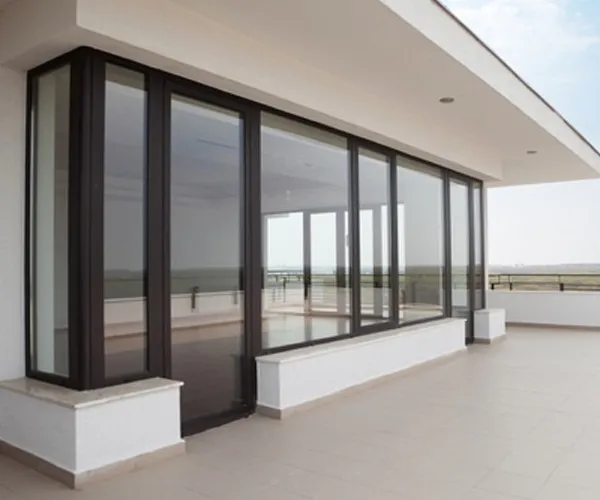
This is the point people most often get wrong. Security glazing does not mean thick, dark or obstructed. Clarity is excellent and daylight is unaffected. Unlike bars or roller shutters, it protects the opening without closing it.
Where it makes sense
- Ground-floor and first-floor flats, where access from outside is easiest
- Street-facing retail, where display glazing is also the security boundary
- Homes with young children, where breakage safety matters more than intrusion
- Balcony and terrace doors, which are large, glazed, and often overlooked
For threats beyond forced entry, bullet-resistant glazing is a separate specification. For balcony fall protection rather than intrusion, invisible grills address a different risk.
Choosing a specification
The right build depends on what you are protecting against, whether the pane also needs to manage heat or noise, and what the frame can carry — a heavy laminated unit needs hardware and a section rated for its weight. See glass options for the full range, or laminated glass windows for complete units.
Tell us the floor, the elevation, and what is on the other side of the glass. Security glazing is not about fear; it is about specifying the opening properly once, instead of reacting later.