
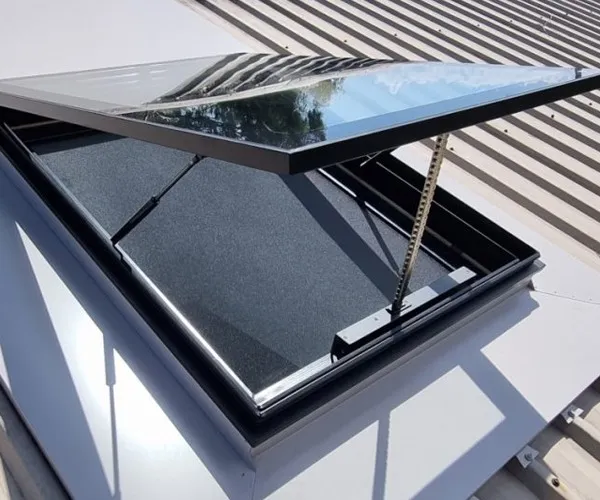
The problem a skylight grill solves
Skylights give you daylight and a sense of height, but they are exposed to the sky in a way no other opening is. Left unprotected, a skylight tends to collect:
- leaves, dust and wind-borne debris, which block drainage and stain the glass
- objects falling from above, which in a dense residential block is not a theoretical risk
- birds and nesting material around the kerb
- foot traffic during roof maintenance, which is the dangerous one
A grill acts as a protective layer above or within the opening. It keeps debris off the glass and makes the area safe to work near, without blocking the light you installed the skylight to get.
What good design balances
A skylight grill is not bars thrown across an opening. Good design holds three things in tension:
- Light transmission — the grid has to be open enough that the room stays bright
- Strength — fixings and members sized for impact and for someone’s weight near the edge
- Appearance from below — it is a ceiling feature whether you intended it or not
Three designs that work here
Tensioned cable grids
Thin stainless cables run in a grid or in parallel lines above the skylight. From below they hardly register and light passes almost unimpeded. This is the most modern and least intrusive option, and the right one where the skylight is the room’s main light source.
The cable and fittings should be marine-grade, for the same reason as balcony invisible grills — Mumbai’s salt air finds the hardware first.
Slim aluminium frames
Narrow extruded sections give structural strength without bulk, and can be integrated into the skylight frame itself so the transition looks deliberate rather than added. Suits contemporary interiors and roofs where the grill needs to take real load.
Patterned grills
Fine geometric motifs, where the grill is meant to be seen. The pattern must stay open enough to illuminate while tight enough to protect — that is the whole craft of it. Works well in heritage-meets-modern homes where a plain grid would look out of place.
Details that decide whether it lasts
Fixings. They pass through or beside the roof build-up, so they must be sealed and flashed properly. This is where skylight leaks actually begin.
Falls and drainage. Water has to run off the grill and away from the kerb rather than pooling at the frame.
Material grade. Roof-level hardware is the most exposed on the building. Marine-grade stainless or an equivalent is not an upgrade here.
Access. If the skylight opens, the grill has to allow it — and if it is fixed, someone still needs to be able to clean the glass.
Specifying it with the skylight
If you are installing the skylight and the grill together, they should be specified together: the kerb, the glazing, the grill fixings and the drainage are one detail, not four. See skylight windows for the glazing side, and the invisible grill range for the cable systems.
Send us a photo of the roof and the opening dimensions. We will tell you what the structure will take and which of the three approaches suits it.