
Skip to content
Khidkiji Slides India

Vertical Wire Invisible Grills

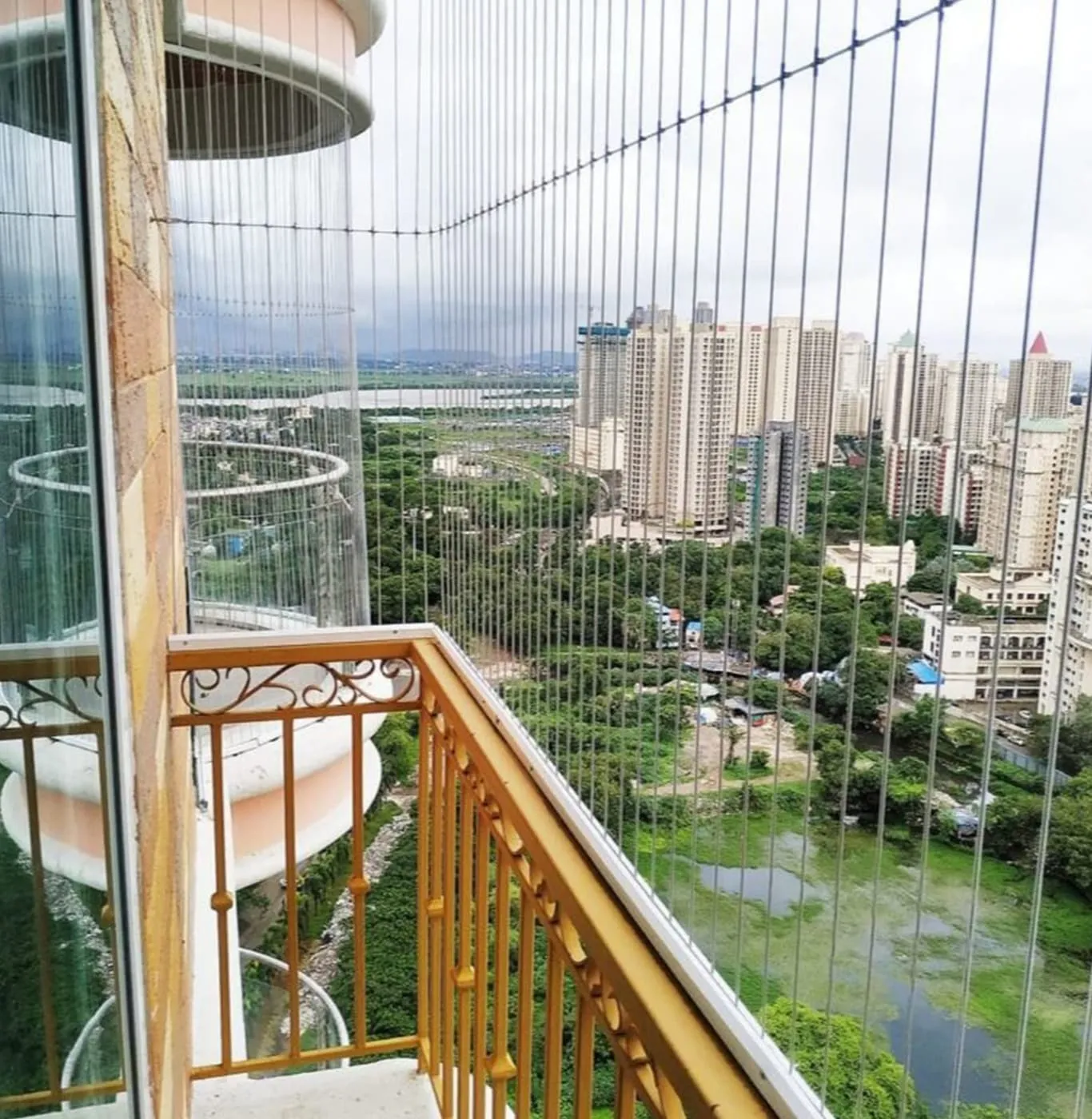
Vertical cables run from the balcony floor or parapet up to the soffit above. It is the most common invisible grill for good reason: the anchors land in the strongest structure available, and vertical lines read as the least intrusive against a skyline.

  • Manufacturing since 2007
  • 5,000+ windows installed
  • 219 corporate partners
Balcony edged with closely spaced vertical steel cables, high-rise flats and trees beyond

Get a quote in one working day

Three fields. No obligation.

Or call +91 80979 88888

Why vertical wire invisible grills

Anchors into the strongest structure

Fixings land in the slab and the soffit above, which is normally the soundest structure on a balcony.

Least visible from inside

Vertical lines read against a vertical skyline, so the eye passes over them more readily than horizontals.

Nothing to climb

Unlike horizontal cables, vertical wires give a child no foothold — the main safety argument for this layout.

Simple to re-tension

Each cable is individually tensioned, so an isolated slack wire is a five-minute adjustment.

How it is built

Stainless steel cables run vertically between anchors at the balcony floor or parapet and the soffit above. Each cable passes through a tensioner, and each is tightened individually to a specified tension.

The anchors are the part that matters. They land in the floor slab and the soffit — on most balconies the soundest structure available — and they have to be fixed into solid concrete rather than screed or repaired render. We check this at survey, because on older Mumbai balconies the parapet top and slab edge have often been made good more than once.

Why vertical is the default

It anchors into better structure

A vertical run has the slab below and the soffit above. A horizontal run relies on the side walls or jambs, which on a balcony may be masonry rather than concrete and may be shared with a neighbour.

Nothing to climb

This is the safety argument that decides it in most family homes. Closely spaced horizontal cables can function as a ladder for a determined toddler. Vertical cables offer no foothold at all.

Where horizontals are preferred for appearance, we say this plainly rather than leave it for later. See horizontal wire grills for when they are the right call.

It reads as less visible

Against a city skyline of vertical buildings and edges, vertical lines disappear more readily than horizontal ones. The difference is subtle but real from inside the room.

Spacing and tension

Spacing follows safety standards — close enough that a small child or a pet cannot pass through. Tension is specified so the cable is taut with negligible deflection under load, and each cable is individually adjustable.

Annual checking is worth the few minutes it takes. A cable that has gone slightly slack is re-tensioned in seconds; one left for years puts extra load on its neighbours.

Materials

Marine-grade stainless for cable, anchors, tensioners and end caps. This is not an upgrade in coastal Mumbai — a lower grade will pit within a couple of monsoons and leave rust staining down the parapet.

Where it suits

Balcony edges of any depth, window openings above ground floor, terrace parapets and internal void edges. For the residential decision in more detail, see invisible grills for balconies in Mumbai, or the full invisible grill range for the other five systems — including cable mesh, which is the choice where a pet climbs.

Common questions

Why choose vertical wires rather than horizontal?

Two reasons. Vertical cables anchor into the floor slab and soffit, which is usually the soundest structure available. And they give a climbing child no foothold, whereas closely spaced horizontal cables can act as a ladder — which is why vertical is the default where children are the concern.

How far apart are vertical wires spaced?

Close enough that a small child or pet cannot pass between them. The exact figure follows safety standards rather than preference, and it is checked against the opening at survey.

Do vertical cables need a top and bottom frame?

Not necessarily. Where the slab and soffit are sound, cables anchor directly into them, which gives the cleanest result. Where the structure will not take direct anchors, a [framed system](/products/invisible-grills/framed/) provides the fixing points instead.

What happens if one cable goes slack?

It is re-tensioned individually. Each cable has its own tensioner, so a single slack wire is a short adjustment rather than a rework of the whole run. Checking tension annually is worth doing.

Can vertical wire grills be fitted to a window rather than a balcony?

Yes. The same system works across window openings above ground floor, where it gives fall protection without the enclosed feel of a barred grill — and without blocking the ventilation the window is there to provide.

Related

Get a quote for vertical wire invisible grills

  • Manufacturing since 2007
  • 5,000+ windows installed
  • 219 corporate partners
Call nowWhatsApp