
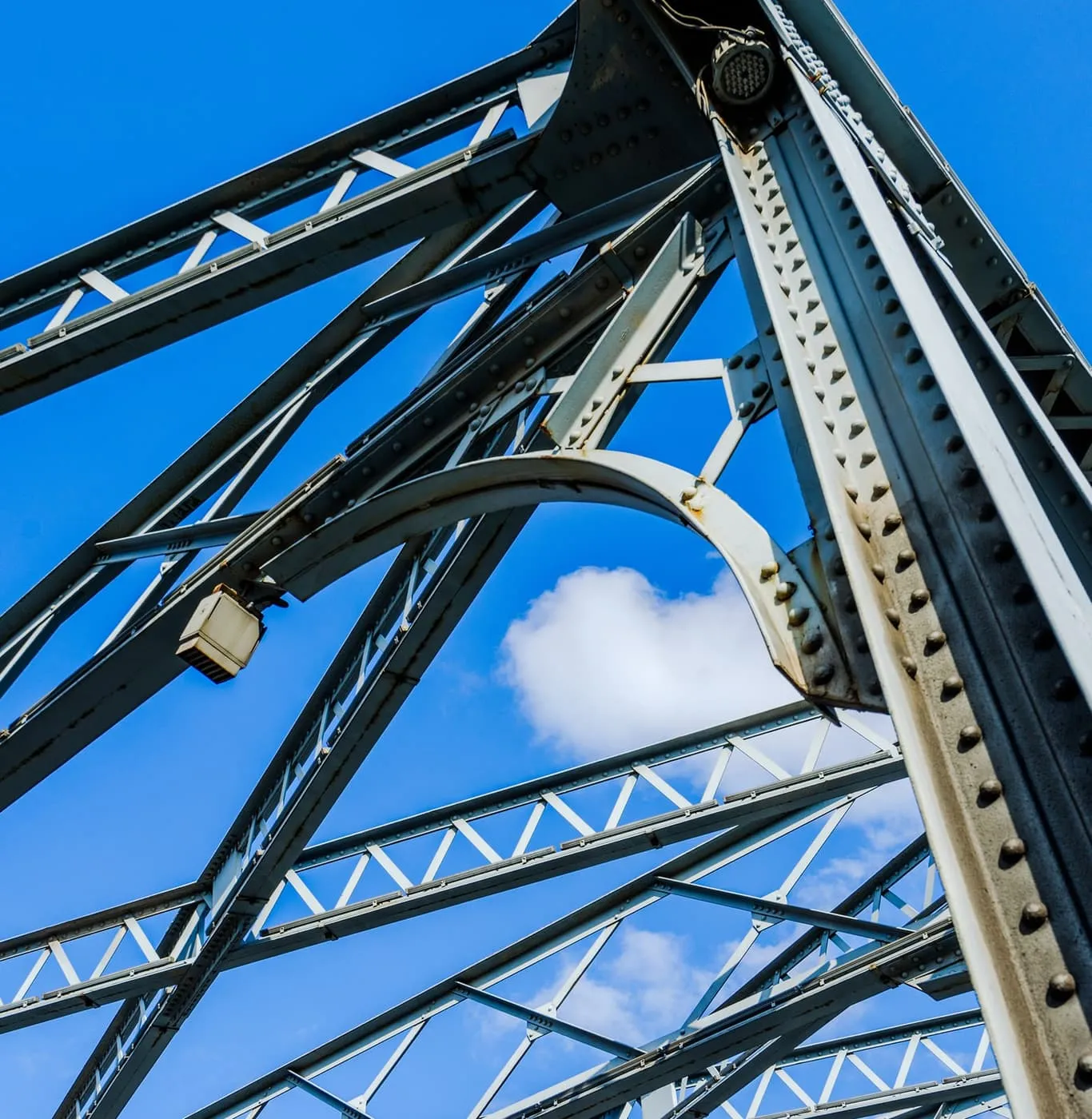
The three things bolting buys
Transport
A workshop can weld a very large assembly. A lorry cannot carry it, and a Mumbai site approach road may not admit it.
Bolting lets members be sized for transport and access, then joined on site. On constrained urban sites this is frequently the constraint that determines the whole structural arrangement.
Sequenced erection
A bolted frame goes up progressively: columns, then primary beams, then secondary members, with connections made as each arrives. Each stage is stable enough to support the next.
That sequence is planned at detailing stage, and getting it right is what keeps a crane working rather than waiting.
Demountability
A bolted structure can be taken apart. That matters for temporary structures, for buildings likely to be reconfigured, and for pre-engineered buildings that may be relocated.
A welded frame, by contrast, has to be cut apart.
Bearing or friction-grip
Bearing connections. Load transfers through the bolt shank pressing against the side of the hole. Simple, economical, and adequate for most static loads.
Friction-grip (slip-critical) connections. Bolts are tightened to a high specified tension so that load transfers through friction between the clamped surfaces, and the joint does not slip at all.
Friction-grip is specified where slip would be a problem — under vibration, under reversing loads, or where movement would cause misalignment elsewhere. It requires controlled tightening and prepared faying surfaces, so it costs more to execute.
Holes are made before coating
An important sequencing point. Holes drilled or punched after galvanising expose bare steel at every edge, and in coastal air that is where corrosion begins.
So holes are made in the workshop as part of fabrication, before the protective coating goes on — which means the detailing has to be right, because there is no easy adjustment afterwards. A hole in the wrong place on site is a real problem rather than an inconvenience.
Tolerance
Bolted connections need holes that line up. Slotted or oversized holes provide some adjustment, and the amount available is a design decision made at detailing.
Too little tolerance and members do not go together on site. Too much and the connection may slip or look sloppy. Getting it right is most of what distinguishes good detailing from adequate detailing.
In practice
Most structures use both methods: welded sub-assemblies fabricated under workshop conditions, joined by bolted connections on site. See the full structural fabrication process for how the two fit together.