
Why sliders need more attention than hinged windows
A casement window hangs on hinges and compresses a gasket all the way round when it closes. A slider does neither. Its weight runs on rollers, in a track at sill level, and it seals by proximity and brush strips rather than by compression.
That design is what makes sliders so useful in Mumbai flats — no swing space needed, large glass areas, works on a balcony — and it is also why they need servicing more often.
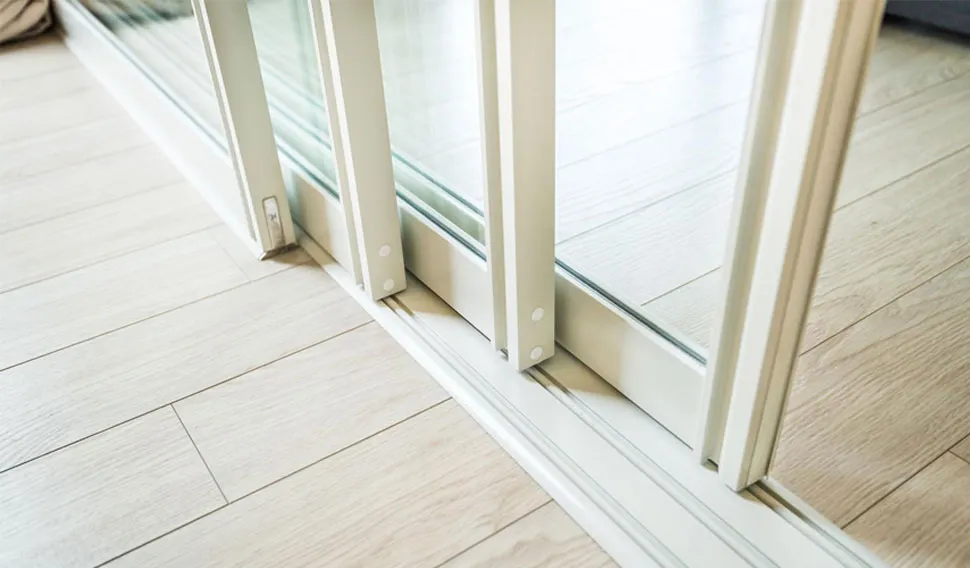
The track is a gutter
This is the part most people do not realise. The bottom track of a sliding window is designed to collect water that gets past the sashes and drain it back outside through weep holes.
When those weep holes silt up — and in this city they will — the track stops draining and starts holding. Water sits against the sill, finds its way over the inner upstand, and appears inside. Almost every monsoon call we get about a sliding window is this.
Clearing and flow-testing the track drainage is the single highest-value thing to do to a slider before the rain.
Rollers and tracks
Rollers carry the whole sash on a small contact area. Two things kill them:
Grit. Dust in the track acts as grinding paste. It wears the roller and scores the track.
Weight. A sash reglazed to double glazing weighs considerably more than it did with a single pane. If the rollers were not upgraded at the same time, they flat-spot quickly.
Symptoms run in this order: slightly heavier operation, then a grinding feel, then the sash jumping or dropping in the track. Replace at the second stage and the track survives; leave it to the third and the track needs re-capping too.
The meeting stile
Where the two sashes overlap is a slider’s weakest point for air, noise and dust. It is sealed with interlocking profiles and brush strips, and the brushes are consumables — they flatten and shed.
Replacing brush seals is cheap and is the fastest improvement available on an old slider that has become noisy. It pairs naturally with the gasket work described under window sealing.
What a slider service covers
- Track cleaned, inspected for wear, re-capped where needed
- Weep holes cleared and flow-tested
- Rollers inspected, adjusted or replaced to the correct load rating
- Sash height adjusted so both panels run level and the interlock meets properly
- Interlock and brush seals replaced
- Handles, locks and anti-lift blocks checked
- Glazing beads and sealed units checked
Getting the specification right next time
If you are replacing rather than servicing, two things are worth knowing. A slider will never seal quite like a casement, so for a bedroom on a main road a casement or a lift-and-slide is a better acoustic bet. And if you are upgrading the glass in an existing slider, upgrade the rollers at the same time.
See sliding windows and uPVC sliding windows for the product side, or the full service and repair range for everything else we maintain.