
Why sliders dominate here
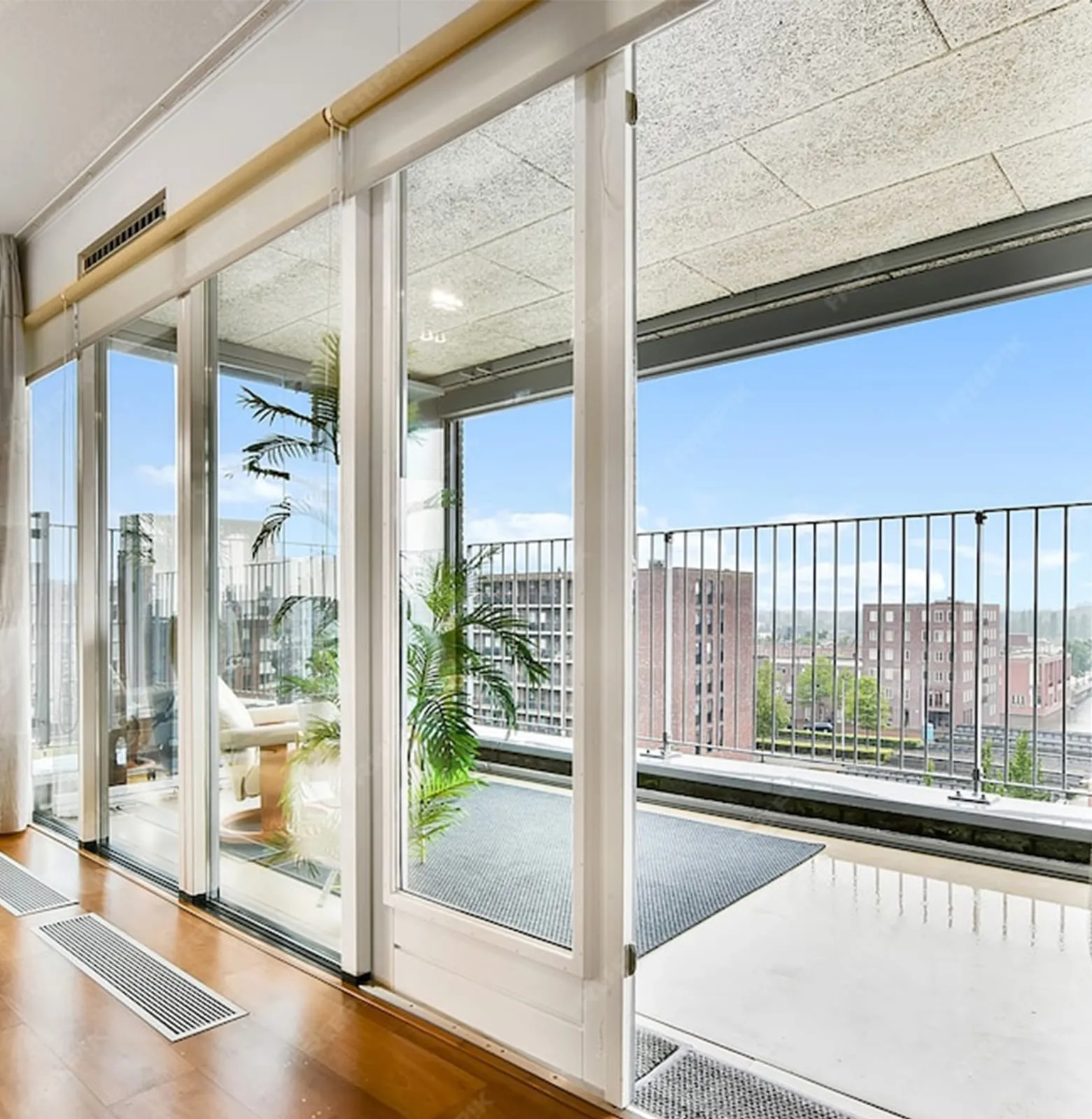
Mumbai flats are compact and most have balconies. A casement swinging inward eats floor space and fights the curtains; swinging outward it fouls the grill, the screen or the parapet. A slider does neither — the sashes move in their own plane and nothing projects.
Sliding systems also carry wide panels easily, so you get more glass and more daylight per opening than a hinged system of the same width.
The trade-off, stated plainly
A slider does not compress a gasket when it closes. It seals by proximity: interlocking profiles at the meeting stile, brush strips in the tracks. That is inherently weaker than a casement, and it shows as more road noise at the same glass specification, more dust on the sill, and a little more air leakage.
None of that makes a slider wrong. It means that if the room is noisy or dusty, you specify the seals and the glass deliberately rather than assuming the window type will handle it.
How many tracks
Two-track. Two sashes, one behind the other, so half the opening clears. Slimmest frame, lowest cost, by far the most common.
Three-track. Two-thirds clears — or two sashes plus an insect screen in the third channel, which is the tidiest screening arrangement available.
Four-track. Sashes in pairs, so most of the opening clears. Deeper frame, higher cost, and the right answer on a wide balcony wall.
If you want the opening to clear completely, that is a slide-and-fold system rather than a slider.
Screens, decided at order
Settle this before manufacture rather than after. A three or four-track window gives the screen a dedicated channel inside the window frame — from outside there is no separate screen frame at all.
Retrofit to a two-track window and the screen has to be mounted over the reveal in its own frame. It works, and it reads as an addition. See insect screens for the options either way.
Safety above ground floor
A sliding sash opens wide and nothing stops it. Travel restrictors limit how far it slides, leaving a gap too narrow for a child to pass while still ventilating the room properly.
Fit them at order. Retrofitting a restrictor to a slider is fiddlier than to a hinged sash, because there is no hinge arm to work with.
Cleaning, at height
Most sliding sashes lift out of the track from inside, which is how you clean the outer faces of a window on the eleventh floor. Confirm at survey that yours can — some four-track arrangements trap the inner sashes, and then the outside of the glass needs external access for the life of the window.
Keeping it running
Two items decide how a slider ages:
- Keep the sill track clear. It is a drained channel, and silted weep holes are behind most complaints about water on the floor.
- Match the rollers to the glass. If you upgrade to a sealed unit later, upgrade the rollers at the same time — the commonest cause of a young slider that has become heavy.
Both are covered under sliding window service, which also deals with the brush seals at the meeting stile — the usual reason an older slider rattles in wind.
Materials
uPVC insulates better and costs less. Aluminium gives slimmer sightlines and spans wider openings, which on a full-height balcony wall is often what decides it. Both are made in Bhandup West to the surveyed opening.
For the same system at door height, see sliding doors.