
Skip to content
Khidkiji Slides India

Sliding Invisible Grills

A fixed invisible grill is a permanent barrier, which is exactly what you want until you need to clean the outside of the glass, get a piece of furniture through, or let a technician reach the air-conditioning unit. A sliding section solves that without compromising the barrier.

  • Manufacturing since 2007
  • 5,000+ windows installed
  • 219 corporate partners
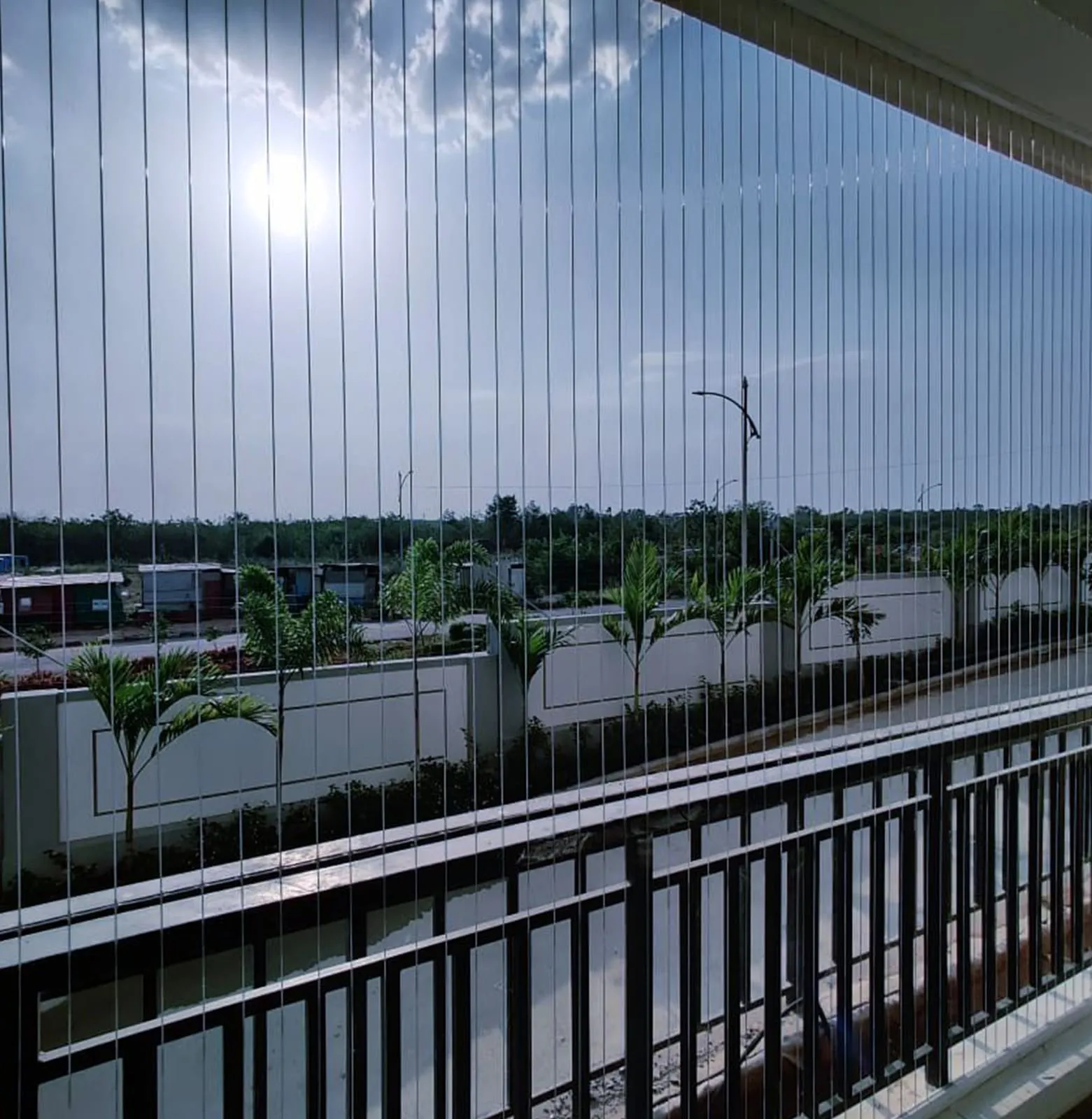
Sunlit balcony strung with horizontal steel cables looking out over low-rise rooftops

Get a quote in one working day

Three fields. No obligation.

Or call +91 80979 88888

Why sliding invisible grills

Access without removal

A section slides aside for cleaning, maintenance or moving things, then closes and locks again.

Locked closed by default

The sliding panel latches shut, so it is a barrier at all times unless someone deliberately opens it.

Same cable spacing

The moving section is built to the same spacing and tension as the fixed run — no weak point at the opening.

Built into any layout

Fits within vertical, horizontal or framed systems, so access does not dictate the rest of the design.

The access problem

An invisible grill that cannot open makes three routine jobs difficult:

Cleaning the glass. The outer face of a balcony door or window behind a grill cannot be reached. On a high floor, where external cleaning is not an option, that means the glass gradually stops being clear.

Servicing equipment. Air-conditioning condensers frequently sit on balconies. A technician needs to reach them.

Moving things. On some flats, the balcony opening is the only route for a large item — and discovering that after the grill is fitted is a bad day.

A sliding section addresses all three without weakening the barrier.

How it works

A panel within the cable run is built to slide sideways on its own track, carrying its cables with it. The rest of the run stays fixed. The panel latches closed and can be key-locked.

Cable spacing and tension within the sliding panel are the same as the fixed run, so the moving section is not a weak point. What changes is that the panel’s own frame carries the cable tension, since it cannot anchor into the building at its leading edge.

The latch matters

The one genuine safety consideration is the latch position. A sliding grill that a child can reach and operate is not a barrier.

We position the latch out of reach as standard, and on a balcony used by young children a key lock rather than a latch is worth specifying. It is a small cost and it removes the only real objection to an opening section.

Sizing it

The panel is sized to what actually has to pass through. Wider is not better here — a wider panel is heavier, loads its track and rollers more, and is more to keep running smoothly.

At survey we ask what needs to go through and how often, and size the opening to that.

Where it fits in the range

A sliding section is a feature rather than a separate system. It can be built into a vertical, horizontal or framed layout, so the decision to include access does not dictate the rest of the design.

Framed systems suit it particularly well, since the frame already provides the structure a sliding track needs.

Maintenance

The track collects dust like any track at a balcony edge, so wiping it out occasionally keeps the panel running easily. That sits alongside the annual cable tension check that every system in the invisible grill range should get.

For the wider residential decision, see invisible grills for balconies in Mumbai.

Common questions

Why would an invisible grill need to open?

Three practical reasons: cleaning the outside of the glazing behind it, servicing an air-conditioning condenser on the balcony, and getting furniture or appliances through an opening that is otherwise the only route. Without an opening section, all three mean removing cables.

Is a sliding section as safe as a fixed one?

Closed and latched, yes — same cable, same spacing, same tension. The safety consideration is the latch: it should be positioned so a child cannot reach or operate it, which is a survey decision rather than a standard detail.

Can the sliding section be locked?

Yes. It latches closed as standard and can be key-locked where required. On a balcony used by young children, a lock rather than a latch is worth specifying.

How wide can the opening section be?

Wide enough to be useful — typically sized to whatever has to pass through, which we establish at survey. The wider it is, the more the sliding panel weighs and the more its track and rollers matter, so it is sized to a real requirement rather than made as large as possible.

Does the sliding track need maintenance?

A little. Like any track at a balcony edge it collects dust, and it should be wiped and kept clear so the panel runs easily. That goes alongside the annual cable tension check covered under [invisible grills](/products/invisible-grills/).

Related

Get a quote for sliding invisible grills

  • Manufacturing since 2007
  • 5,000+ windows installed
  • 219 corporate partners
Call nowWhatsApp