
Skip to content
Khidkiji Slides India

Zig Zag Mesh

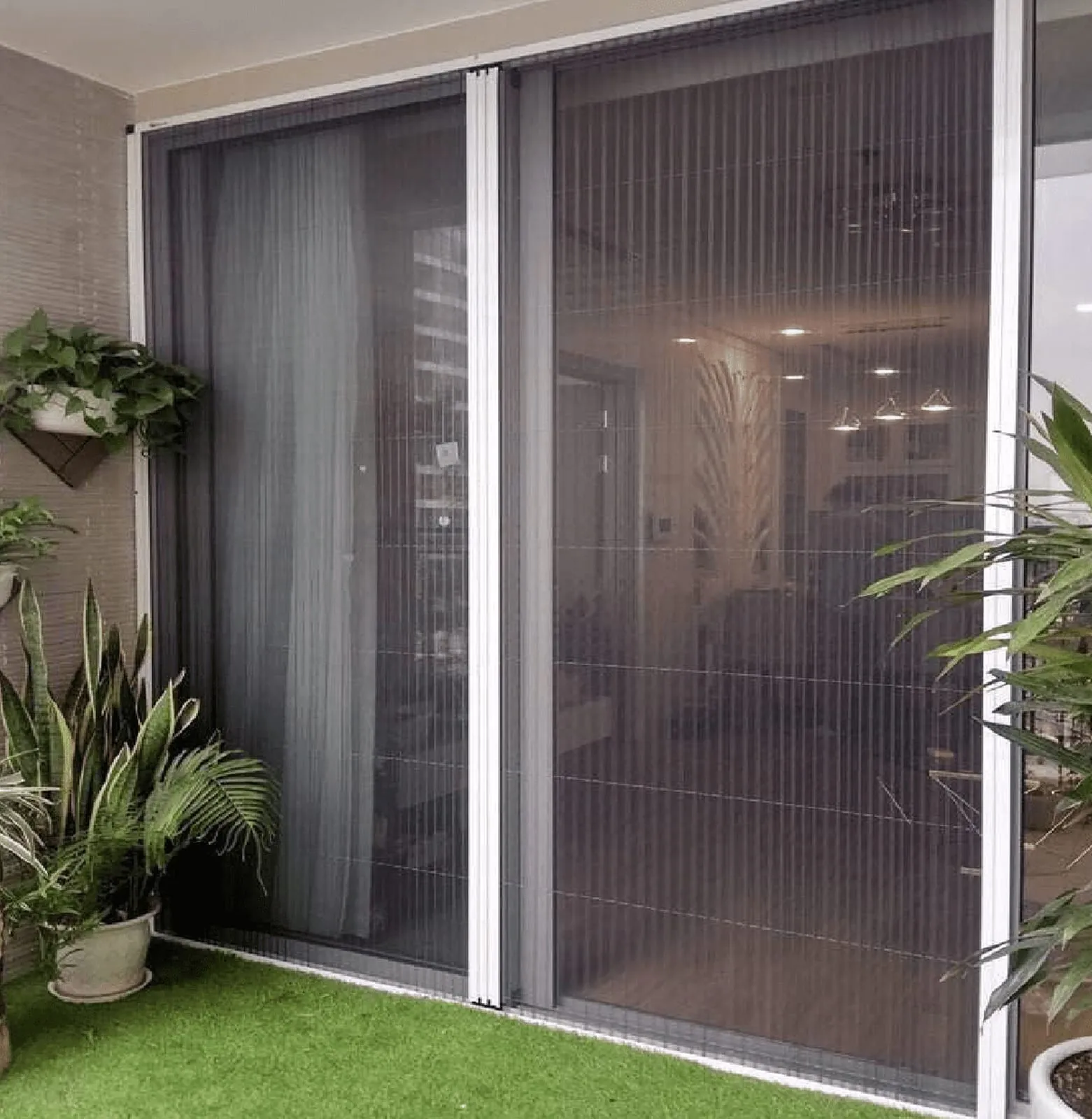
Zig-zag mesh is pleated screening built for spans a standard system cannot handle. Where a wide opening would leave an ordinary pleated screen heavy to draw and prone to uneven folding, this one is engineered with the guides, cords and pleat depth to run properly across the full width.

  • Manufacturing since 2007
  • 5,000+ windows installed
  • 219 corporate partners
Wide patio opening spanned by a concertina mesh screen, potted plants along the terrace

Get a quote in one working day

Three fields. No obligation.

Or call +91 80979 88888

Why zig zag mesh

Built for very wide spans

Guide, cord and pleat geometry engineered for full-width terrace and folding-door openings.

Even folding across the run

Cord tensioning that keeps the pleats aligned over a long span, which is where cheaper systems fail.

Centre-opening available

Two halves meeting in the middle, halving the travel and the stack depth at each jamb.

Retracts to a slim stack

Folded away, a very wide screen occupies only a narrow channel at the edge of the opening.

What it is for

The problem with screening a very wide opening is that every option gets worse as the span grows. A framed sliding panel becomes heavy and needs more track. A standard pleated screen becomes hard to draw and the pleats stop folding evenly. A roller screen becomes very wide and prone to tracking off its guides.

Zig-zag mesh is a pleated system re-engineered for that span: deeper pleats, heavier head and sill guides, and a cord system tensioned to keep the folds aligned across the whole run.

Where it is used

Full-width terrace openings. Where a living room opens onto a terrace across its whole width.

Slide-and-fold door runs. The type of opening that clears almost entirely — which is wonderful until dusk. A zig-zag screen spans it independently of the door panels, so it works whether the doors are fully stacked or partly open.

Large lift-and-slide openings. Where the glazed panels are too wide for a screen to run in a shared track.

Enclosed balconies. Screening a whole balcony rather than a single opening, so the space becomes usable in the evening.

Single or centre-opening

Single. The mesh stacks at one jamb and sweeps the full width. Simplest, and fine up to a point.

Centre-opening. Two halves meet in the middle and stack at both jambs. On a wide run this is almost always better: each half travels half the distance, the stack at each end is half as deep, and the screen is materially lighter to draw.

A screen that is heavy to draw is a screen that stops being used, so this is a practical decision rather than an aesthetic one.

What makes it run well over a long span

The bottom guide. On a long run, grit in the lower guide is the single biggest cause of uneven folding. It needs wiping out more often than on a small window, and the guide profile is designed to shed dust rather than trap it.

Cord tension. Keeps the pleats parallel across the run. It is set at installation and can be adjusted.

Pleat depth. Deeper pleats stack more compactly and hold their geometry better over distance.

Trade-offs

It is a folding mesh over a very large area, so it is not the system to choose where it will be pushed against regularly. For a door in constant use, a rigid sliding screen on a narrower opening will outlast it.

It also costs more than a standard pleated screen, which is the right choice on anything within its span.

See the full insect screen range for the comparison across all four systems.

Common questions

What makes zig-zag mesh different from ordinary pleated mesh?

Scale and engineering. Both work on the same concertina principle, but zig-zag systems are built with deeper pleats, heavier guides and more careful cord tensioning so they run evenly over spans where a standard pleated screen would drag and fold unevenly.

How wide an opening can a zig-zag screen cover?

Considerably wider than a framed sliding panel or a standard pleated screen. The practical limit depends on the opening and whether it runs as a single sweep or centre-opening — we establish that at survey rather than quoting a figure that may not apply to your run.

Is a centre-opening configuration better on a wide opening?

Usually, yes. Two halves meeting in the middle halve the distance each has to travel and halve the stack depth at each jamb. It also makes the screen lighter to draw, which on a very wide run is the difference between something you use and something you stop using.

Does a wide pleated screen sag in the middle?

Not if the guide and cord system is designed for the span. Sag over a long run is exactly the failure a zig-zag system is engineered to avoid. What causes it in practice is grit in the bottom guide, so keeping that clear matters more here than on a narrow opening.

Can zig-zag mesh be used with folding doors?

Yes — a full-width [slide-and-fold](/doors/types/slide-and-fold-doors/) opening is one of the situations it exists for. The screen runs across the whole opening independently of the door panels, so it can be drawn whether the doors are fully open or partly stacked.

Related

Get a quote for zig zag mesh

  • Manufacturing since 2007
  • 5,000+ windows installed
  • 219 corporate partners
Call nowWhatsApp