
Skip to content
Khidkiji Slides India

Pleated Mesh

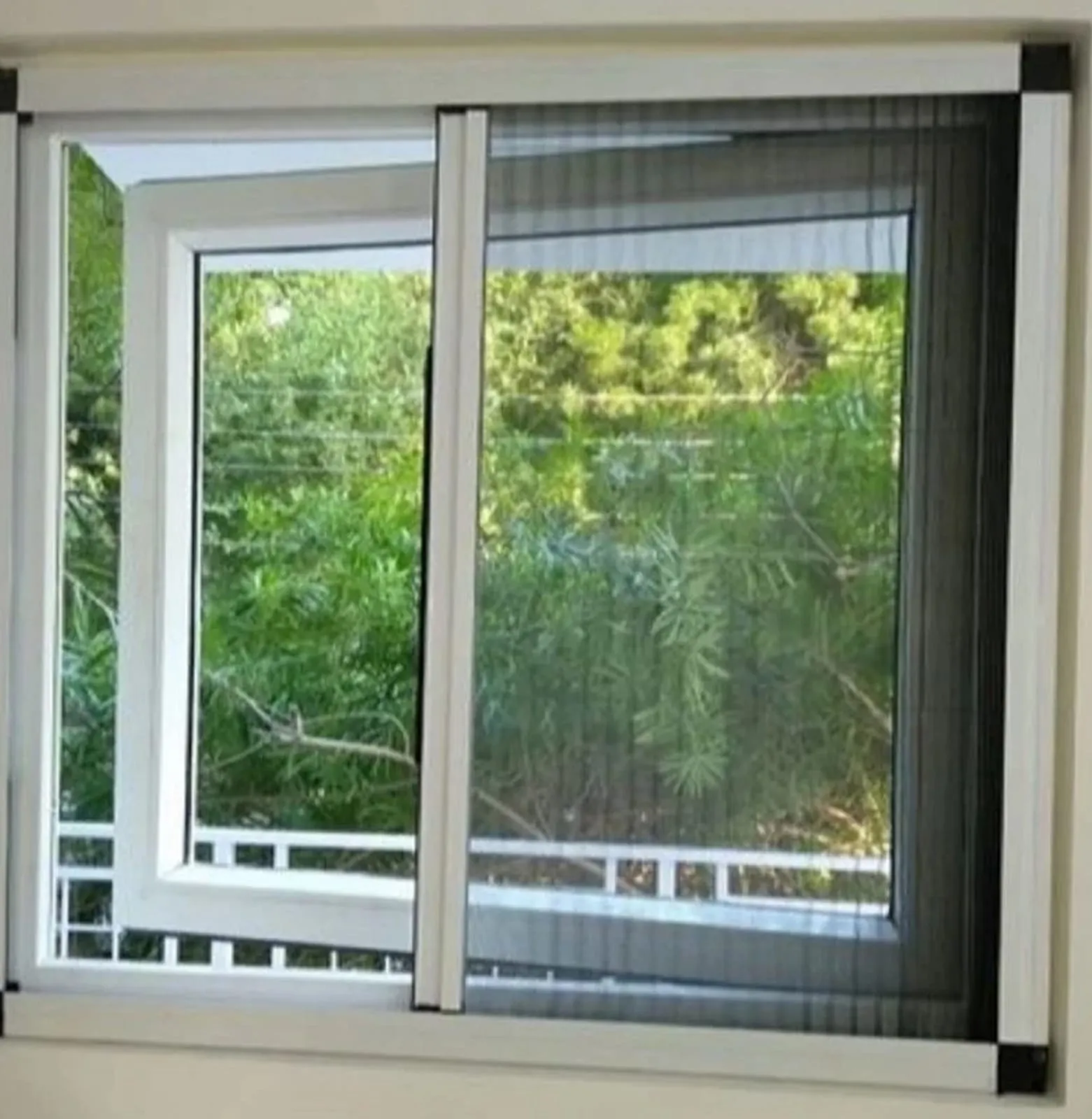
A pleated screen folds concertina-style into a slim channel at the side of the opening. Extended, it covers the full width; retracted, it collapses into a strip a few centimetres deep. That makes it the most versatile screen we make — and the one that suits openings where nothing else will fit.

  • Manufacturing since 2007
  • 5,000+ windows installed
  • 219 corporate partners
Sliding window fitted with a finely pleated mesh screen, green garden visible through it

Get a quote in one working day

Three fields. No obligation.

Or call +91 80979 88888

Why pleated mesh

Retracts almost completely

Folded, the mesh stacks into a narrow side channel, so the opening is clear when you are not using it.

Works on outward-opening sashes

Mounted inside and folding clear, it does not obstruct a casement or top-hung window swinging out.

Spans wide openings

A single pleated run covers far wider openings than a framed sliding panel can sensibly handle.

No spring tension to fail

The pleats are guided by cords rather than driven by a roller spring, so there is less mechanism to go wrong.

How it works

The mesh is permanently pleated, like a paper fan, and threaded with cords that run through guides at the head and sill. Pulling the leading edge across the opening unfolds the pleats; pushing it back stacks them into a slim channel at the side.

There is no roller and no spring. The pleats hold their own shape and the cords keep them aligned, which means one fewer mechanism to fail — a genuine advantage over a spring-loaded roller screen in a humid, salty climate.

Where it is the right answer

Outward-opening sashes

This is the main case. A casement or top-hung window swings outward, so any screen has to sit on the inside — and it cannot occupy the space the handle sweeps through or the sash needs to open.

A pleated screen folds sideways into a narrow channel, clear of both. A framed sliding panel would sit permanently across part of the opening; a pull-down screen can conflict with a top-hung sash.

Wide openings

A single pleated run spans considerably wider than a framed panel can sensibly manage, because the weight stays low and stacks at one end rather than hanging from a track.

Where the screen should disappear

Retracted, a pleated screen is a strip a few centimetres deep at the edge of the reveal. If the view matters and the screen is only needed in the evenings, this is the neatest result available.

Trade-offs, honestly

Less robust than a framed panel. It is a folding mesh, not a rigid sash. On a door used many times a day, especially with children or pets pushing at it, a sliding mesh will last longer.

The bottom guide needs to stay clean. Grit in the lower guide is what makes pleats fold unevenly. In Mumbai that means wiping it out periodically rather than occasionally.

More expensive than a basic framed screen. Not dramatically, but it is a more engineered product.

Configurations

Single-opening, where the mesh stacks at one side, or centre-opening, where two halves meet in the middle and stack at both jambs. Centre-opening halves the distance the mesh has to travel and is worth it on very wide runs.

For spans beyond what a standard pleated system handles, zig-zag mesh is the heavier-duty version of the same principle.

Cleaning

Extend it fully, brush or vacuum gently along the pleats, then wipe the head and sill guides. Doing this a few times a year keeps the fold even and the airflow up — see the insect screen range for how dust affects every screen type in this city.

Common questions

How does a pleated insect screen work?

The mesh is permanently pleated and runs on cords through top and bottom guides. Pulling the leading edge across unfolds the pleats; pushing it back folds them into a slim channel at the side. There is no spring or roller — the pleats and cords do the work.

Is pleated mesh suitable for a balcony door?

Yes, and it is a common choice. It spans a wide opening, retracts nearly out of sight, and on a door that opens outward it folds clear of the leaf. On a door used very heavily, a rigid [sliding screen](/products/insect-screens/sliding-mesh/) is more robust.

Does the pleated mesh crease or sag over time?

The pleats are permanent, so it does not crease in the way a plain fabric would. Sag is prevented by the guide cords keeping the pleats aligned. What matters is keeping the bottom guide clear of dust and grit, which is what causes uneven folding.

Can pleated screens be used on outward-opening windows?

Yes, and this is where they are most useful. A [casement](/windows/types/casement-windows/) or [top-hung](/windows/types/top-hung-windows/) sash swings outward, so the screen must be inside. Pleated mesh folds clear to the side rather than occupying the plane the handle and sash need.

How do you clean a pleated screen?

Extend it fully and vacuum or brush the mesh gently along the pleats, then wipe the guides. The bottom guide is the part that matters most — grit there is what makes the pleats fold unevenly.

Related

Get a quote for pleated mesh

  • Manufacturing since 2007
  • 5,000+ windows installed
  • 219 corporate partners
Call nowWhatsApp